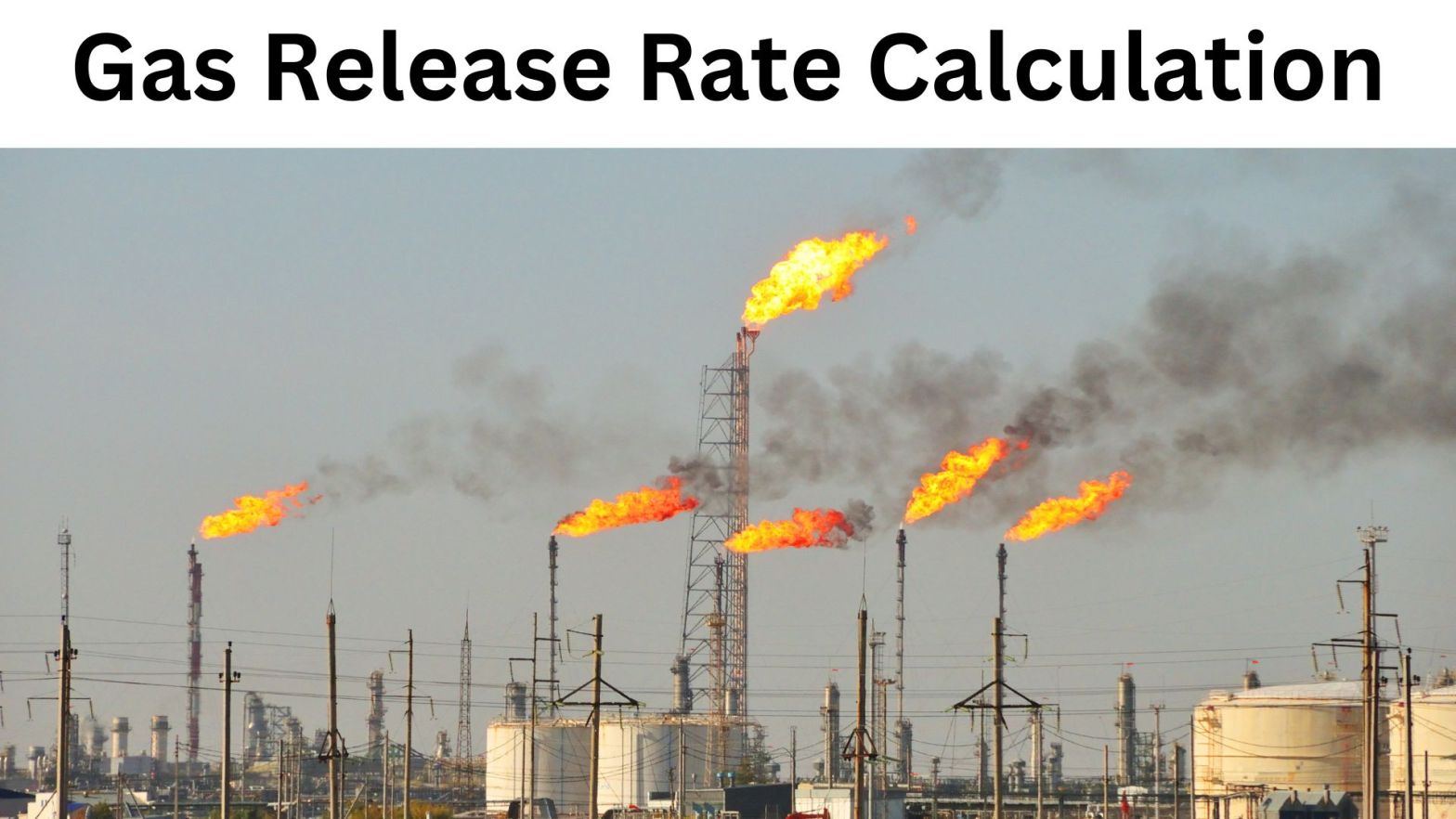
การคำนวณอัตราการรั่วไหลของก๊าซ (Gas Leakage หรือ Source Modeling) มีความสำคัญอย่างยิ่งในงานวิศวกรรมความปลอดภัยทางกระบวนการ (Process Safety) เนื่องจากเป็น “จุดเริ่มต้น” ของการประเมินและป้องกันอุบัติภัยทั้งหมด โดยมีความสำคัญในมิติต่าง เช่น
- เป็นข้อมูลตั้งต้นสำหรับการจำลองผลกระทบ (Foundation for Consequence Modeling)
- การประเมินความเสี่ยงและกำหนดระยะปลอดภัย (Risk Assessment & Safety Distances)
- การคาดการณ์อุบัติภัยร้ายแรงที่อาจลุกลาม (Predicting Major Accidents) และ
- การวางแผนรับมือเหตุฉุกเฉิน (Emergency Planning and Response)
Gas Thermodynamic Process

Isentropic (Adiabatic) Process
เหตุผลหลักที่วิศวกรและมาตรฐานด้านความปลอดภัยเลือกใช้สมมติฐาน การไหลแบบเอนโทรปีคงที่ (Isentropic Flow) ในการสร้างสมการประเมินอัตราการรั่วไหลของก๊าซผ่านรูรั่ว (Hole/Orifice) มาจากหลักการทางฟิสิกส์และการลดความซับซ้อนทางคณิตศาสตร์
- การรั่วไหลเกิดขึ้นอย่างรวดเร็วมากจนไม่มีการถ่ายเทความร้อน (Adiabatic Process) เมื่อเกิดรอยรั่ว ก๊าซภายใต้ความดันสูงจะพุ่งออกมาอย่างรวดเร็วและรุนแรง ปริมาณมวลที่ไหลออกมีมหาศาลในระยะเวลาอันสั้น ทำให้กระบวนการนี้ไม่มีเวลาพอที่จะเกิดการแลกเปลี่ยนความร้อนระหว่างก๊าซที่กำลังขยายตัวกับสิ่งแวดล้อมหรือผนังของภาชนะได้ทัน จึงสามารถอนุมานได้ว่าการไหลนี้เป็นกระบวนการแบบอะเดียแบติก (Adiabatic) ซึ่งไม่มีความร้อนเข้าหรือออกจากระบบ
- พลังงานความดันเปลี่ยนเป็นพลังงานจลน์โดยตรงและมีแรงเสียดทานต่ำ (Reversible Process) ลักษณะการปล่อยก๊าซผ่านรูรั่วแบบอิสระ (Free expansion release) พลังงานที่สะสมอยู่ในรูปของความดันจะถูกแปลงไปเป็นพลังงานจลน์ (ความเร็วในการพุ่ง) เกือบทั้งหมด เมื่อรวมกับการที่ก๊าซไหลผ่านรูรั่วซึ่งมีระยะทางสั้นๆ ผลกระทบจากการสูญเสียพลังงานเนื่องจากแรงเสียดทาน (Frictional effects) จึงมีน้อยมากจนสามารถละทิ้งได้ การไหลนี้จึงถือว่าเป็นกระบวนการที่ผันกลับได้ (Reversible)
- สำหรับ ideal gas ที่มีการไหลแบบเอนโทรปีคงที่ (Isentropic Flow) ทำให้เราสามารถนำความสัมพันธ์พื้นฐานที่ว่า PV^k=constant มาใช้ร่วมกับสมการก๊าซอุดมคติได้

- For example, the isentropic process is the expansion of gas in a piston-cylinder.
Isothermal Process
- An isothermal process is one that occurs at constant temperature.
- In an isothermal process, the internal energy of the system remains constant (dU = 0), meaning that any heat added to or removed from the system is entirely converted into work (Q = -W)
- For an ideal gas undergoing an isothermal process, the relationship between pressure (P) and volume (V) is described by the ideal gas law.

- The example process of isothermal is a gas confined within a cylinder fitted with a movable piston. And to maintain the temperature, this cylinder shall be placed in a large water bath with provided temperature by heat sink.

And the gas leakage formula is presented in below.

When apply the discharge coefficient (CD)

- Sharp-edged orifice and Reynold number > 30,000: CD = 0.61
- Short section of pipe attached to a vessel and L/D ratio > 3: CD = 0.81
- Conservative approach: CD = 1
Gas Release Rate Calculation
Gas Release Rate Calculator
เครื่องมือคำนวณอัตราการปล่อยก๊าซผ่านรูรั่วตามสมการก๊าซอุดมคติและการขยายตัวแบบ Isentropic
Calculation Results
Flow RegimeCritical Ratio
–
P0 / Pa
Actual Ratio
–
P0 / Pa
Flow Coefficient, K
–
Dimensionless
SI Results
Hole Area, Ah
–
m²
Mass Flow Rate
–
kg/s
Mass Flow Rate
–
kg/hr
หมายเหตุ: การคำนวณนี้อิง Ideal Gas และ Isentropic Expansion หากความดันสูงมาก
หรือก๊าซมีพฤติกรรมเบี่ยงเบนจาก Ideal Gas ควรประเมินด้วยสมการ Real Gas เพิ่มเติม
Imperial Results
Hole Diameter
–
in
Hole Area
–
in²
Initial Pressure
–
psia
Ambient Pressure
–
psia
Initial Temperature
–
°F
Initial Temperature
–
°R
Mass Flow Rate
–
lb/s
Mass Flow Rate
–
lb/hr
